Showing posts with label books. Show all posts

15 November, 2013

Artbank Sturgeon Magazine


Watch the Four Corners feature on the launch of Artbank, featuring an interview with founding Director, Graeme Sturgeon. It originally aired on ABC TV, 23 August 1980. Here

=================

Thirty three years later, Artbank has launched a bi-annual art magazine and website named after Sturgeon.

"The launch of Australian government art rental agency Artbank’s new biannual (sic) magazine, Sturgeon, is a major milestone for the organization (sic), which functions as a platform for the support and promotion of contemporary Australian art through its art rental program as well as through commissioned artworks. " and "To complement the magazine, Artbank have launched a great new website (sturgeonmagazine.com.au) that features article previews, additional web-only content, and information on upcoming issues. "

http://www.sturgeonmagazine.com.au/archive/


09 September, 2013

Degenerate Art


Entartete Kunst or Degenerate Art Exhibition of 1937


“DEGENERATE ART: A POWERFUL STORY OF THE NAZIS' VILIFICATION OF THE AVANT-GARDE AND THEIR ATTACK ON MODERN CULTURE,”

Directed by David Grubin and narrated by David McCullough, this program examines the infamous Entartete Kunst (degenerate art) exhibition mounted by the Nazis in Munich in 1937

(with some commentary by Robert Hughes)

"The exhibit opened in Munich and then traveled to eleven other cities in Germany and Austria. In each installation, the works were poorly hung and surrounded by graffiti and hand written labels mocking the artists and their creations. Over three million visitors attended making it the first "blockbuster" exhibition. "

====================

In Munich, Julien Bryan documented the spirited Nazi assault on modern art when he visited the infamous and popular Entartete Kunst [Degenerate Art] exhibition. This exhibition featured over 650 paintings, sculptures, prints, and books which had been confiscated from German public museums, including the works of some important 20th century artists like Marc Chagall, Wassily Kandinsky, Paul Klee, Emil Nolde, Georg Grosz, and Ernst Ludwig Kirchner. The pieces were chaotically hung with accompanying criticism and derisive text, in order to clarify to the German people what type of art was considered unacceptable. Afterwards, many works were sorted out for sale and sold at auction. Some were acquired by museums, and others by private collectors. Certain pieces were appropriated by Nazi officials and some were burned. Josef Goebbels ordered a more thorough scouring of German art collections after the exhibition, bringing the total number of modern works seized by the Nazis to over 16,000.

see original film here

======================

More informaton here
http://fcit.usf.edu/holocaust/arts/artdegen.htm

08 April, 2012

Returning Stolen Art


Loot: Stolen Treasurers of the Ancient World

December 3, 2008

Sharon Waxman writer
Sharon Waxman discusses questions of ownership of cultural objects and reads from new her book, Loot: Stolen Treasures of the Ancient World.
Why are the Elgin Marbles in London and not on the Acropolis? If such stunning art objects have admittedly come to Western museums through the heavy hand of 19th century cultural exploitation, do these museums have an ethical responsibility to return them? What if such return harmed these objects because their home country is too poor to maintain, house and protect? What ethical standards should Western museums follow when they obtain art objects from Third World countries? Sharon Waxman addresses these questions and presents her book, Loot: Stolen Treasures of the Ancient World.
video platformvideo managementvideo solutionsvideo player

http://forum-network.org/lecture/loot-stolen-treasurers-ancient-world

Linda Nochlin


Cosponsored by the Vera List Center for Art and Politics, The Association Internationale des Critiques d'Art/USA (AICA: International Association of Art Critics) presents the second annual lecture addressing current issues in the world of art criticism. Vist http://www.newschool.edu/vlc and http://www.veralistcenter.org

This year's distinguished critic, Linda Nochlin, is the Lila Acheson Wallace Professor of Modern Art at the Institute of Fine Arts at New York University. Professor Nochlin addresses the issue of how the goals of art criticism differ from those of art history.

AICA was founded after World War II to promote professional art criticism as essential to winning widespread understanding and support for contemporary art.

===============

Why Have There Been No Great Women Artists?
by LINDA NOCHLIN
text here
http://www.bakeru.edu/faculty/adaugherty/wc/module5/artists.html


28 September, 2011

Google, Books & Copyright

On September 12 this year, the Authors Guild in the USA, the Australian Society of Authors, the Quebec Union of Writers and a number of individual authors filed suit against a partnership of five American universities and research libraries (the same universities involved in the Google Books case), over what the plaintiffs described as “one of the largest copyright infringements in history”. [1]

According to the Complaint [2]: “The Universities have directly caused millions of works that are protected by copyright holders to be scanned, stored in digital format, repeatedly copied and made available online for various uses. These actions not only violate the exclusive rights of copyright holders…but, by creating at least two databases connected to the Internet that store millions of digital copies of copyrighted books, the Universities risk the widespread, unauthorised and irreparable dissemination of these works.”

full story

15 June, 2011

History of Illustrated News

THE PICTORIAL PRESS ITS ORIGIN AND PROGRESS.
BY MASON JACKSON.

With One Hundred and Fifty Illustrations.

LONDON: HURST AND BLACKETT. PUBLISHERS.
13 GREAT MARLBOROUGH STREET.
1885.

view online here

http://www.gutenberg.org/files/36417/36417-h/36417-h.htm


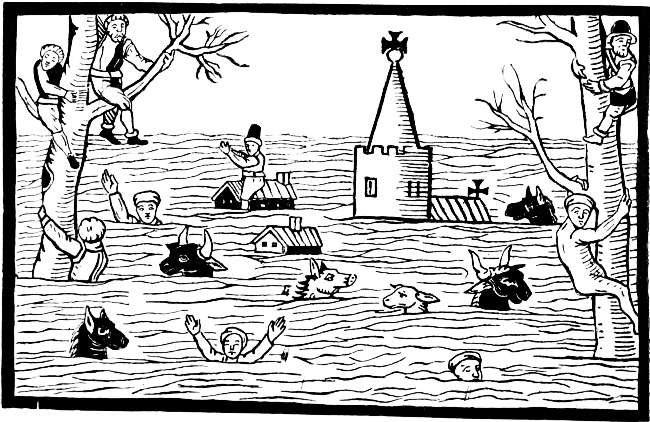
GREAT FLOOD IN MONMOUTHSHIRE, 1607

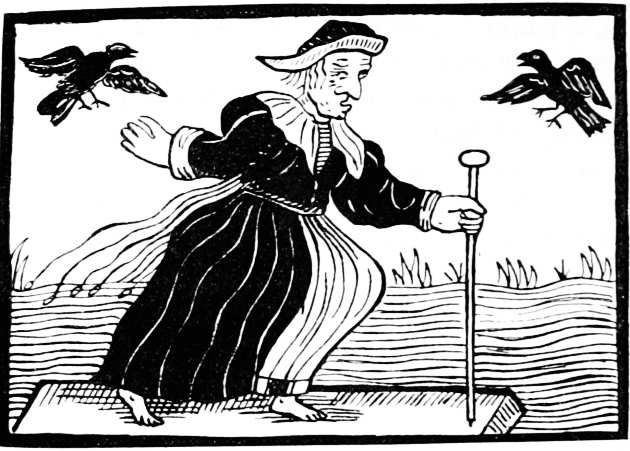
"When the printing-press came into use this love of pictures had a wide field for development. Some of the first 2 books printed in England were illustrated with woodcuts, and many of the tracts, or ‘News-books,’ which preceded regular newspapers, were adorned with rude engravings. It mattered not how graphic was the pen, its work was deemed incomplete without the aid of the pencil. It often happened that the pen was none the better for the fellowship, but the public taste was not fastidious, and the work sufficed for the occasion. In tracing the origin and progress of pictorial journalism we shall find in ‘the abstracts and brief chronicles of the time’ many curious illustrations of contemporary history. The subject is not without interest now that the illustrated newspaper has become a prominent feature in the journalism of every country.

The development of the newspaper press and its unrestricted use as the exponent of public opinion is one of the most interesting signs of modern progress."


MIRACULOUS NEWS FROM MUNSTER IN GERMANY, 1616.


THE NEWBURY WITCH, 1643

Chapter IX describes 'How an Illustrated Newspaper is Produced'

"The art of wood-engraving, to which the illustrated newspaper owes its existence, has been fully described by competent authors. The best work on the subject is that produced by the late John Jackson in 1839; but since that date the resources of the art have been greatly developed, chiefly through the influence of illustrated newspapers."


CAMP OF THE ‘TIMES’ AND ‘ILLUSTRATED LONDON NEWS’' CORRESPONDENTS ATTACKED BY WOLVES. BULGARIA, 1877.

The section on the difficulties of war correspondent artists is particularly interesting.

"When the great war of 1870, between France and Prussia, broke out, the illustrated newspapers had special artists on both sides, who encountered all sorts of hardships, and passed through all  kinds of adventures in fulfilling their duties. Besides being frequently arrested as spies, and undergoing the privations of beleagured places, they had also to run the risk of shot and shell, and sometimes they were obliged to destroy their sketching materials under fear of arrest. One of them was in custody as a spy no less than eleven times during the war. The danger of being seen sketching or found with sketches in their possession was so great that on one occasion a special artist actually swallowed his sketch to avoid being taken up as a spy. Another purchased the largest book of cigarette papers he could obtain, and on them he made little sketches, prepared in case of danger to smoke them in the faces of his enemies."

Chapter X covers other methods of producing illustrations.

"The pictorial press has hitherto been mainly dependent on the art of wood-engraving for its illustrations, but latterly several inventions have been used, not unsuccessfully, in the production of blocks in relief, to be printed in the same manner as woodcuts. The great improvements that have been made in surface printing render it probable that in the future these process blocks may be extensively used in illustrated newspapers. They are recommended by their cheapness and rapid production; and as the intermediate process of engraving is dispensed with, they retain the exact touch of the artist, and are not liable to be mutilated by careless or hasty engraving. It may be said of all these inventions, however, that they are best suited for slight sketches, and should not be applied to the production of highly-finished subjects. For the latter there is nothing better than a woodcut, which, when well executed and carefully printed, has a richness superior to any other method of engraving. But in the present day competition is so great and the march of events is so rapid that cheapness and rapidity of production will override artistic excellence, and process-engraving, as it is called, will probably be the method adopted for the daily pictorial press, the era of which is approaching."

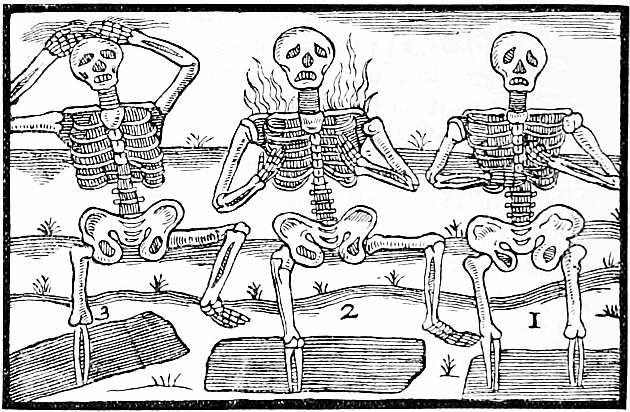
Death and Skeletons


"The use of a skeleton as a symbol of death in painting seems to have been unusual during the Renaissance till towards the end of the fifteenth century. The earliest artist of note in this period to adopt it, was Jean Prevost who represented a man taking a letter from a skeleton without seeing the messenger. Then came Grien who painted three works of the kind. In the first Death holds an hour-glass at the back of a woman, and points to the position of the sand ; in the second the bony figure has clutched a girl by the hair ; and the third represents a skeleton apparently kissing a girl.  They are all hideous works, and might well have acted as a warning to succeeding artists.

After Grien the use of a skeleton in design was practically confined to the smaller German masters till the middle of the second half of the sixteenth century, when it disappeared from serious work. From this time on, for the next three centuries artists of repute rarely introduced a skeleton into a painting, though it is to be found occasionally in engravings. One might have supposed that the unsightly form had been abandoned with the imps, evil spirits, and other crudities of past days, but it was not to be.

The search for novelties in recent times has only resulted in the resuscitation of bygone eccentricities, and we must not be surprised that the skeleton is amongst them."

source
Art Principles by Ernest Govett (1919)

23 May, 2011

Van Gogh and Russell

Vincent Van Gogh and John Peter Russell

Ann Galbally

Ann Galbally traces the passage of the extraordinary and unlikely friendship between Vincent Van Gogh and John Peter Russell.


A huddle of wooden sheds in a courtyard off the Boulevard Montmartre known as Cormon's atelier was where the handsome art student from Sydney, John Peter Russell, first met the haunted, intense newcomer from Holland, Vincent van Gogh. Both were foreigners in the competitive art world of Paris in the 1880s, and over the next two years both would discover a passion for colour painting.

Now, for the first time, Ann Galbally traces the passage of this extraordinary and unlikely friendship. The two spent hours together in a Paris studio experimenting with the fast-moving changes in art practice. Both artists ultimately rejected the Impressionist's world of urban sophistication and left Paris to develop colour painting in isolation, Van Gogh at Arles in Provence, and Russell on Belle Ile off the coast of Brittany.

With a supporting cast including Gauguin, Rodin, Monet and Matisse this is a
journey through the struggles and failures, plots and intrigues of artistic life. A tale of love found and lost and ultimate tragedy, it makes for enthralling reading.


more (preview book here)
http://catalogue.mup.com.au/978-0-522-85376-6.html


14 May, 2011

German Expressionism @MoMaPS1

MoMa PS1
German Expressionism: The Graphic Impulse

March 27–July 11, 2011

From E. L. Kirchner to Max Beckmann, artists associated with German Expressionism in the early decades of the twentieth century took up printmaking with a collective dedication and fervor virtually unparalleled in the history of art. The woodcut, with its coarse gouges and jagged lines, is known as the preeminent Expressionist medium, but the Expressionists also revolutionized the mediums of etching and lithography to alternately vibrant and stark effect. This exhibition, featuring approximately 250 works by some thirty artists, is drawn from MoMA’s outstanding holdings of German Expressionist prints, enhanced by selected drawings, paintings, and sculptures from the collection. The graphic impulse is traced from the formation of the Brücke artists group in 1905, through the war years of the 1910s, and extending into the 1920s, when individual artists continued to produce compelling work even as the movement was winding down.

The exhibition takes a broad view of Expressionism, highlighting a diverse array of individuals—from Oskar Kokoschka and Vasily Kandinsky to Erich Heckel and Emil Nolde—who nonetheless shared visual and thematic concerns. Their works reflect a period of intense social and aesthetic transformation, and several themes of continuing resonance emerge. These include a focus on urban experience, an uncompromising approach to the body and sexuality, and an abiding preoccupation with nature, religion, and spirituality. Most pivotal for these years, however, was the experience of World War I. The war and its aftermath are the subject of works by a range of artists, including Otto Dix, whose series of fifty searing etchings, The War, was based on his own service in the trenches; Käthe Kollwitz, in a portfolio of seven woodcuts focusing on the devastation felt by the families left behind; and Max Beckmann, whose lithographic series, Hell (1919), confronts the violence and decadence in Berlin during the immediate postwar period.

In addition to a publication and a major website on German Expressionism, the exhibition will mark the culmination of a major four-year grant from The Annenberg Foundation to digitize, catalogue, and conserve all of the approximately three thousand Expressionist works on paper in the Museum’s collection.

More
http://www.moma.org/visit/calendar/exhibitions/1103


=========================================


This website documents the Museum's extraordinary collection of more than 3,000 Expressionist prints, drawings, paintings, sculptures, illustrated books, and periodicals, exploring the various artists, themes, and techniques associated with the major modernist movement that developed in Germany and Austria during the early decades of the 20th century.


======
Featured Artists


======
Videos

======
Books


======
Much More


13 May, 2011

River of Wisdom

In the Shanghai World Expo 2010, the "Animated Version of the Riverside Scene at Qingming Festival" created by modern multimedia technology earns its reputation as the star exhibit in the China Pavilion. 

Projected on a giant screen of more than 120 metres long and 6 metres high, the picture shows its details with animation including moving people, running water, various kinds of goods being displayed for sale, boat trackers shouting on the river and boats swinging their ways forward. A vivid, artificial river meanders through the lower part of the giant picture, giving visitors a stunning experience and an illusion that they are staying in Bianjing, the capital of Northern Song Dynasty nine hundred years ago. This giant picture is called "River of Wisdom" because it depicts many cultural aspects demonstrating the wisdom of Chinese in ancient times.

The animated version of the picture is 30 times of its original scroll. Elaborate computer animation gives life to characters and objects in the painting. An integrated image is formed by several high resolution projectors using sophisticated computer geometric transformation and correction technology. The entire features of the original painting including all its streets, boats and buildings are retained in the animation. The scene is portrayed in day to night cycles lasting for four minutes with dramatic interplay of light and colour. It is indeed a masterpiece that blends state-of-the-art animation technology with traditional Chinese culture.


Zhang Zeduan's "Riverside Scene at Qingming Festival" is beyond doubt among the top ten most famous Chinese historical paintings. Besides its extremely high artistic value, this picture possesses, more importantly, tremendous historic value due to its vivid depiction of the civilian life of different social classes in Bianjing and in the suburbs during the Qingming Festival. It provides important historical information for those studying the urban life in the Song Dynasty and opens one more window for the moderns endeavouring to understand the ancient Chinese culture.


25 April, 2011

Amsterdam Art/Book Fair 2011


The first Amsterdam Art/Book Fair will take place the 14 & 15 of May 2011, presenting a high end international selection of art publications. The fair aims to reflect on the emerging practices and new development in art, through a selection of publishers from 16 countries. Printed matter and digital media edited by independent publishers and artists, magazines and institutions, art schools and graphic design studios are featured in this first edition.

Vlaams Cultuurhuis De Brakke Grond
Nes 45, NL-1012KD Amsterdam
www.brakkegrond.nl

talks & lectures
http://www.amsterdamartbookfair.com/talks_lectures.html

After Show Party
Sunday 15 May
22:00 (Time to be confirmed)
Trouw Gebouw Amsterdam


28 March, 2011

Art Marketing


Grow Creative - The Art of Marketing Art

Ebook giving tips and advice on how to market artwork including photography, illustration, design, art and more


26 March, 2011

Millennium Tours - Stockholm


Millennium Tour
Follow along in Mikael Blomkvist and Lisbeth Salander’s footsteps while getting additional background information about the characters and the author. The walk starts at Bellmangatan 1, where Mikael Blomkvist lives, then passes the Millennium editorial office, Lisbeth Salander’s luxury apartment and many other locations mentioned in the books and films.

http://www.stadsmuseum.stockholm.se/museet.php?artikel=109&sprak=english


Do the Millennium-Tour on your own!
You can also buy the Millennium map and do the walk on your own!

The map is available in the following languages:
Swedish - English - French
Spanish - German - Italian
English - Finnish - Russian

You are welcome to buy your map at the Stockholm City Museum or at the Stockholm Tourist Centre at Vasagatan or at Arlanda Airport.

25 March, 2011

Subject Index Books 2005 -2007


Exhibitions
Australian women's art
contemporary art collection
Middle Eastern Manuscripts - Melbourne

artist’s books - Melbourne
banned books

History

the history of the book
The Secret Life of Type
Bligh's notebook

Theory

transversal on critique
art & language

Comics & zines
grrrl

Events

Leiden Book Fair review
Call - Book Arts

Publications
a. athens contemporary art review
Lilith

PhotoStatic - xerography magazine
Art SA's magazine Artstate
The Blue Notebook = uk
machine at raw space
art magazines - australia
runway
Book review - Photopolymer Plates
Handbook of Non-Toxic Intaglio

resources

BibliOdyssey Books
Book Studio Blog
Australian imprints in the British Library
Queensland Bookbinders' Guild
The Centre for Fine Print Research
illustration house
print council of australia

Artist Books
lawrence finn
infidelities
Melinda Pap
dead cat press
kylie stillman

Novels
animal farm
more animal farm

Authors
First Wave Feminists

sunburnt country
on Greer
beautiful boy
shakespeare illustrated


Subject Index Books 2007 -2010


History

History of Chinese Printmaking

printmaking and the artist book

events
call - Artists Books QLD

2008 Editions|Artists' Book Fair
CODEX Foundation Symposium 2007

ARTISTBOOK INTERNATIONAL
The NY Art Book Fair
5th artists' books + multiples fair

Comics & Zines

VROOM! - Paris

KRAZY! - Vancouver
Manga Mania - Frankfurt

Exhibitions
Book Arts Exhibition - Russia

Mirror of the World - SLV

Mirror of the World - State Library of Victoria
Book Art of the Russian Avant-Garde, 1910–1917
Blood on Paper: The Art of the Book
fierce pussy
Illuminated manuscripts - Melbourne

Australian Etchings & Engravings - AGNSW

Artist Book Exhibition - melbourne
Books as Works of Art
Audiotour Podcast - How I entered there I cannot truly say
Unbound: Artists' books

Book Artists
Robert The : Bookguns
Brian Dettmer

Karen Kunc - Artist Books


Books Online
LibriVox - Free Audio Books
Free Books Online

Online Books in both English & Chinese
Online Books from Read Print

Batavia

Online Publishing

Blurb at Picnic 08


videos

Animated Book - NZ

Helpdesk humour

Medieval Imagination - video

The Man From Snowy River

resources
Steal This Book

QUT Art Museum Resources

Artists’ Book website

Arts Writers Grant
Arrow - Aust. Research Online

Writing About Art
visual database of artists' books - V & A
Book Arts at the Centre for Fine Print Research, UK
1911 encyclopedia

Art Theory
AAAARG - art theory


Legal /Copyright

Google Book Theft

symposium on Neo-Censorship

Authors

Dale Spender - Book
Greer on Hathaway

Doris Lessing wins Nobel Literature Prize
Portuguese Discovery of Australia in 1522
Eliza Younghusband
Lucy Lippard - interview

publications
TateEtc - new issue

tate etc
Drawing - Manifest OHIO
Runway

Print Quarterly

Frieze magazine

Kunstgeschichte - Art Journal

RealTime Arts
E-flux Journal
Artforum: May ’68
KultureFlash - London
Afterall - Spring issue
Printed - NGA
Modern Australian Women
Crossings: Electronic Journal of Art and Technology
Art Almanac September
Masculinities Reflected
Book Arts Newsletter
Art & the Feminist Project
Contemporary Australian Art 1966–2006
CIRCA - Ireland
Umbrella - artists’ books
Feminist Art - ARTnews


21 March, 2011

Book Arts Exhibition - Russia


Book arts exhbition from Theory & Practice in Moscow. The article is in Russian but there are pictures and you can follow the links to the artist's websites.
full article here
http://theoryandpractice.ru/posts/1511-nauka-buk-arta-novaya-zhizn-starykh-knig