Showing posts with label printmaking. Show all posts

26 October, 2013

Kabuki Prints: NMS

Kabuki
Japanese Theatre Prints
4 October 2013 – 2 February 2014
NATIONAL MUSEUMS OF SCOTLAND

Come face to face with Kabuki theatre’s most famous warriors, villains, heroes and heroines through 61 of the finest Japanese woodblock prints from the Museum’s collection. Meet the larger-than-life characters of Kabuki theatre to find out why these rare and beautiful prints became a cultural phenomenon in 19th century Japan.
Open daily 10:00–17:00


Website
http://www.nms.ac.uk/our_museums/national_museum/exhibitions/kabuki.aspx

CATALOGUE here

GOOGLE IMAGES OF KABUKI PRINTS

======================================
About the exhibition

These striking designs present vivid depictions of Kabuki, the popular form of traditional, all-male, Japanese theatre which combines drama, music, dance and acrobatics in convoluted plots concerning dramatic emotional conflicts and feats of derring-do.

Much like magazines and posters today, these woodblock prints were a cheap and colourful medium of entertainment. Their visual style will be familiar to fans of Manga comics, Japanese cinema and even Quentin Tarantino’s Kill Bill films. Publishing houses commissioned designs from the very greatest artists of the era, but the prints were affordable to the average person on the street.

This exhibition offers a rare opportunity to view these beautiful images and to learn more about a fascinating cultural and social period in Japanese history.

Pictures of the Exhibition
http://www.nms.ac.uk/our_museums/national_museum/exhibitions/kabuki/inside_the_exhibition.aspx

================
events

Moku Hanga: Introduction to Japanese Woodblock Printing
Date: Fri 22 November
Time: 12:30 (3hrs)
Cost: £5
Take inspiration from our exhibition, Kabuki: Japanese Theatre Prints, to make your own woodblock print with artist and printmaker, Elspeth Lamb. Moku Hanga is the unique Japanese art-form of printing blocks with water-based pigments, known for its intense application of colour. One of the beauties of this technique is that it does not require solvents or a printing press – so the technique can be applied at home without expensive equipment. All materials will be supplied but please bring along a simple line drawing to work from.
more info

27 September, 2013

Scottish Printmaking: lecture

Lecture by Murdo Macdonald
'Printmaking and the Scottish Gàidhealtac'

Filmed on 25 October 2012 at Edinburgh Printmakers

"Printmaking which refers to the culture of the Scottish Gàidhealtachd has been at the heart of Scottish art since the pioneering 'Ossian' etchings by Alexander Runciman in the late 18th Century. I'll explore this tradition up to the present, not least through the prints made in 2002 for An Leabhar Mòr / The Great Book of Gaelic, by artists such as Norman Shaw and Frances Walker.

Murdo Macdonald is Professor of History of Scottish Art at the University of Dundee. He is a former editor of Edinburgh Review. He is author of Scottish Art in Thames and Hudson's World of Art series. His recent research has explored the art of the Scottish Gàidhealtachd, the cultural milieu of Patrick Geddes, and Robert Burns and visual thinking. He is an honorary member of the Royal Scottish Academy."


22 September, 2013

Master Editions : Print Exhibition

Master Editions
Halcyon Gallery, London
19 Sep 2013 - 10 Nov 2013

http://www.halcyongallery.com/exhibitions/master-editions

"Ranging from the Old Masters, with works by Rembrandt, the Impressionists, and Modern Masters including Pablo Picasso, Henri Matisse, and Joan Miró; the exhibition features leading artists from Europe and America. Exceptional pieces by Andy Warhol are also on show, as well as other contemporaneous artists including Robert Motherwell, Roy Lichtenstein, and Keith Haring."


Catalogues
Volume I
Volume II

Lecture: John Phillips 'Limited Imagination'

Lecture by John Phillips 'Limited Imagination'
@ Edinburgh Printmakers

From 31 January 2013

"At the heart of contemporary printmaking sits a glaring contradiction. Twisting common ubiquity into elitist rarity, practitioners who create limited editions almost universally celebrate print's democratic availability.

John Phillips, director of London Print Studio, will explore how and why this dilemma arose, and ask if, given changes to production and distribution wrought by new media, it is likely to remain in the future."


=========================

An illustrated discussion on the "limited edition" from a uk-centric viewpoint, as you would expect from a London based printmaker.

03 July, 2013

3D printed reproduction


" a recent installation at the Andy Warhol Museum in Pittsburgh (PA), in collaboration with Materialise, adds to the question of what it looks like when you mix 3D printing with work intended to question the value of the multiple."

http://blog.maketank.it/2013/07/dadaist-warhol-3d-printing

24 April, 2013

PRINTFEST UK


PRINTFEST was set up in 2001 by printmakers Judy Evans and Ronkey Bullard and takes place over the early May Bank Holiday weekend. It is based in the friendly market town of Ulverston, Cumbria, on the edge of the Lake District, where the Coronation Hall which provides a beautiful and relaxed setting for the display of artwork from throughout the UK and further afield.

The event has grown significantly in recent years, with a steady increase in visitor numbers and in the value of artwork sold.

Homepage

http://www.printfest.org.uk/index.html

Exhibiting Artists

http://www.printfest.org.uk/exhibiting_artists.html

exhibiting artists archive: 2012 | 2011 | 2010 | 2009 | 2008 | 2007 

PRINTFEST 2013 will be held at The Coronation Hall, Ulverston on Saturday 4 and Sunday 5 May 2013 between 10am and 5pm.
Entrance £4, children and students free

Friday 3 May
7pm - 9pm Private View

Where:
Coronation Hall, County Square, Ulverston, Cumbria LA12 7LZ.
Look out for the signs on the A590 for Printfest 2013.
Download an Printfest e-flyer here

23 April, 2013

London Original Print Fair


Royal Academy of Arts
Burlington House,
Piccadilly, London W1J 0BD
Thursday 25 – Sunday 28 April 2013

The London Original Print Fair, the longest-running specialist print fair in the world, will again show in the Main Galleries of the Royal Academy this April. In its 28th year, LOPF will feature 50 prominent galleries, dealers and print studios from the across the UK as well as Finland, France, Germany, Ireland and Italy.

Works on sale range from £100 to over £100,000 and showcase the broadest scope of art history. From Renaissance engravings to etchings by Picasso and prints by a wide range of contemporary artists like David Hockney RA, Tracey Emin RA, Gilbert & George and many more – the variety at LOPF is paramount.

www.londonprintfair.com

list of exhibitors

Download the 2013 Catalogue (58Mb)

previous years

London Original Print Fair - Year 27 - 2012
London Original Print Fair - Year 26 - 2011
London Original Print Fair - Year 25 - 2010
London Original Print Fair - Year 24 - 2009
London Original Print Fair - Year 23 - 2008
London Original Print Fair - Year 22 - 2007
London Original Print Fair - Year 21 - 2006
London Original Print Fair - Year 20 - 2005
London Original Print Fair - Year 19 - 2004
London Original Print Fair - Year 18 - 2003
London Original Print Fair - Year 17 - 2002
London Original Print Fair - Year 16 - 2001

09 November, 2012

Impact 8

28th August – 1st September 2013

Print Festival Scotland


Impact 8 International Printmaking Conference:
A celebration of interdisciplinarity and exploration through the medium of print.

The eighth Impact international conference will be hosted in Dundee as a central element to the inaugural Print Festival Scotland – an event which aims to confirm the cultural diversity, historical significance and future potential of print.

Foregrounding the inherent experimental and interdisciplinary nature of print practices Impact 8 will provide a critical and interactive platform for the varied interests that make print such a unique discipline.  From its hybrid roots in industry and scholarship, through traditional design applications and fine art practices to it’s consistent significance within emerging technologies and theoretical debate – print continues to play a crucial role in the exploration of borders and crossings – be they geographical, ideological, cultural, theoretical or practical.


 http://www.conf.dundee.ac.uk/impact8/home/

22 May, 2012

The Printed Image in China

Clarissa von Spee, curator, Chinese and Central Asian collections, Department of Asia, The British Museum

Delve into the history of printing and papermaking—invented in China centuries before it was known in Europe—and gain further insight into The Printed Image in China, 8th--21st Century, an exhibition presenting over 130 Chinese prints from the British Museum's comprehensive collection. Works discussed include Buddhist prints from the Silk Road, colorful images used in folk rituals and festivals, imperial engravings, antiwar images from the Modern Woodcut Movement, and internationally acclaimed contemporary prints.

The Printed Image in China, 8th--21st Century
May 5--July 29, 2012 at The Metropolitan Museum of Art

The exhibition was organized by the British Museum with the support of the American Friends of the British Museum.


According to current scholarship, printing on paper was invented in China about 700 A.D., making China the country with the longest history of printing in the world.

16 March, 2012

15 June, 2011

History of Illustrated News

THE PICTORIAL PRESS ITS ORIGIN AND PROGRESS.
BY MASON JACKSON.

With One Hundred and Fifty Illustrations.

LONDON: HURST AND BLACKETT. PUBLISHERS.
13 GREAT MARLBOROUGH STREET.
1885.

view online here

http://www.gutenberg.org/files/36417/36417-h/36417-h.htm


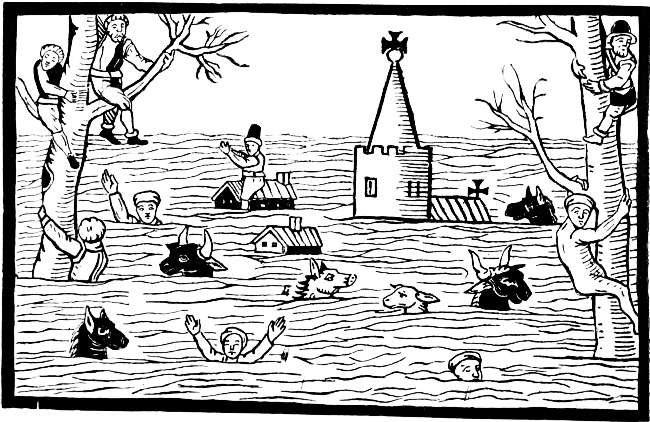
GREAT FLOOD IN MONMOUTHSHIRE, 1607

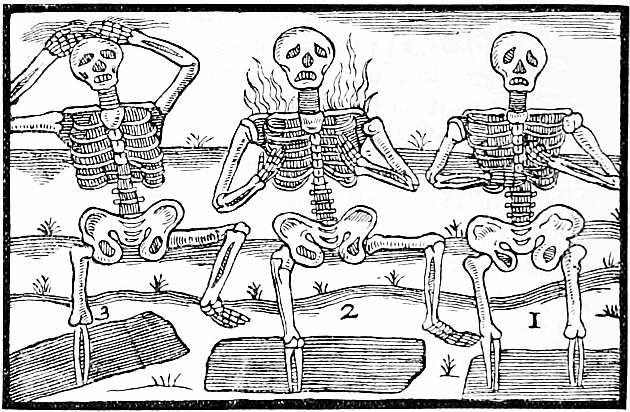
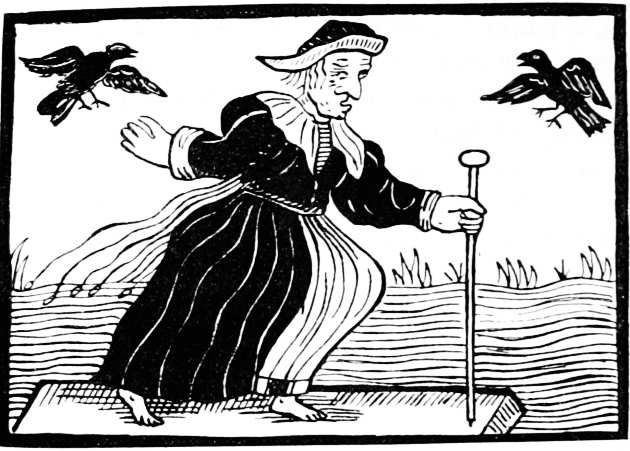
"When the printing-press came into use this love of pictures had a wide field for development. Some of the first 2 books printed in England were illustrated with woodcuts, and many of the tracts, or ‘News-books,’ which preceded regular newspapers, were adorned with rude engravings. It mattered not how graphic was the pen, its work was deemed incomplete without the aid of the pencil. It often happened that the pen was none the better for the fellowship, but the public taste was not fastidious, and the work sufficed for the occasion. In tracing the origin and progress of pictorial journalism we shall find in ‘the abstracts and brief chronicles of the time’ many curious illustrations of contemporary history. The subject is not without interest now that the illustrated newspaper has become a prominent feature in the journalism of every country.

The development of the newspaper press and its unrestricted use as the exponent of public opinion is one of the most interesting signs of modern progress."


MIRACULOUS NEWS FROM MUNSTER IN GERMANY, 1616.


THE NEWBURY WITCH, 1643

Chapter IX describes 'How an Illustrated Newspaper is Produced'

"The art of wood-engraving, to which the illustrated newspaper owes its existence, has been fully described by competent authors. The best work on the subject is that produced by the late John Jackson in 1839; but since that date the resources of the art have been greatly developed, chiefly through the influence of illustrated newspapers."


CAMP OF THE ‘TIMES’ AND ‘ILLUSTRATED LONDON NEWS’' CORRESPONDENTS ATTACKED BY WOLVES. BULGARIA, 1877.

The section on the difficulties of war correspondent artists is particularly interesting.

"When the great war of 1870, between France and Prussia, broke out, the illustrated newspapers had special artists on both sides, who encountered all sorts of hardships, and passed through all  kinds of adventures in fulfilling their duties. Besides being frequently arrested as spies, and undergoing the privations of beleagured places, they had also to run the risk of shot and shell, and sometimes they were obliged to destroy their sketching materials under fear of arrest. One of them was in custody as a spy no less than eleven times during the war. The danger of being seen sketching or found with sketches in their possession was so great that on one occasion a special artist actually swallowed his sketch to avoid being taken up as a spy. Another purchased the largest book of cigarette papers he could obtain, and on them he made little sketches, prepared in case of danger to smoke them in the faces of his enemies."

Chapter X covers other methods of producing illustrations.

"The pictorial press has hitherto been mainly dependent on the art of wood-engraving for its illustrations, but latterly several inventions have been used, not unsuccessfully, in the production of blocks in relief, to be printed in the same manner as woodcuts. The great improvements that have been made in surface printing render it probable that in the future these process blocks may be extensively used in illustrated newspapers. They are recommended by their cheapness and rapid production; and as the intermediate process of engraving is dispensed with, they retain the exact touch of the artist, and are not liable to be mutilated by careless or hasty engraving. It may be said of all these inventions, however, that they are best suited for slight sketches, and should not be applied to the production of highly-finished subjects. For the latter there is nothing better than a woodcut, which, when well executed and carefully printed, has a richness superior to any other method of engraving. But in the present day competition is so great and the march of events is so rapid that cheapness and rapidity of production will override artistic excellence, and process-engraving, as it is called, will probably be the method adopted for the daily pictorial press, the era of which is approaching."

13 June, 2011

14 May, 2011

German Expressionism @MoMaPS1

MoMa PS1
German Expressionism: The Graphic Impulse

March 27–July 11, 2011

From E. L. Kirchner to Max Beckmann, artists associated with German Expressionism in the early decades of the twentieth century took up printmaking with a collective dedication and fervor virtually unparalleled in the history of art. The woodcut, with its coarse gouges and jagged lines, is known as the preeminent Expressionist medium, but the Expressionists also revolutionized the mediums of etching and lithography to alternately vibrant and stark effect. This exhibition, featuring approximately 250 works by some thirty artists, is drawn from MoMA’s outstanding holdings of German Expressionist prints, enhanced by selected drawings, paintings, and sculptures from the collection. The graphic impulse is traced from the formation of the Brücke artists group in 1905, through the war years of the 1910s, and extending into the 1920s, when individual artists continued to produce compelling work even as the movement was winding down.

The exhibition takes a broad view of Expressionism, highlighting a diverse array of individuals—from Oskar Kokoschka and Vasily Kandinsky to Erich Heckel and Emil Nolde—who nonetheless shared visual and thematic concerns. Their works reflect a period of intense social and aesthetic transformation, and several themes of continuing resonance emerge. These include a focus on urban experience, an uncompromising approach to the body and sexuality, and an abiding preoccupation with nature, religion, and spirituality. Most pivotal for these years, however, was the experience of World War I. The war and its aftermath are the subject of works by a range of artists, including Otto Dix, whose series of fifty searing etchings, The War, was based on his own service in the trenches; Käthe Kollwitz, in a portfolio of seven woodcuts focusing on the devastation felt by the families left behind; and Max Beckmann, whose lithographic series, Hell (1919), confronts the violence and decadence in Berlin during the immediate postwar period.

In addition to a publication and a major website on German Expressionism, the exhibition will mark the culmination of a major four-year grant from The Annenberg Foundation to digitize, catalogue, and conserve all of the approximately three thousand Expressionist works on paper in the Museum’s collection.

More
http://www.moma.org/visit/calendar/exhibitions/1103


=========================================


This website documents the Museum's extraordinary collection of more than 3,000 Expressionist prints, drawings, paintings, sculptures, illustrated books, and periodicals, exploring the various artists, themes, and techniques associated with the major modernist movement that developed in Germany and Austria during the early decades of the 20th century.


======
Featured Artists


======
Videos

======
Books


======
Much More


07 May, 2011

Woodcuts - Statens Museum for Kunst


Woodcuts from Durer to Tal R

16 April - 4 September 2011. The Royal Collection of Graphic Art

How can seemingly chaotic cuts, carvings, and incisions in a piece of wood be transformed into a meaningful image? That is the subject of this exhibition. By examining how woodcuts are made, we look behind the motifs shown in the pictures. The exhibition shows selected highlights from the history of woodcut and focuses on those times when woodcut played a central part on the art scene, i.e. the 16th century and the late 19th century. Many contemporary artists also use the woodcut technique today. Tal R is one of them.

http://www.smk.dk/en/explore-the-art/exhibitions/woodcuts/
What are woodcuts?
View and zoom in on the works
Family Guide
Video: b/w woodcut with Tal R
Video: colour woodcut with Tal R
Five questions for the curator

Palle Nielsen


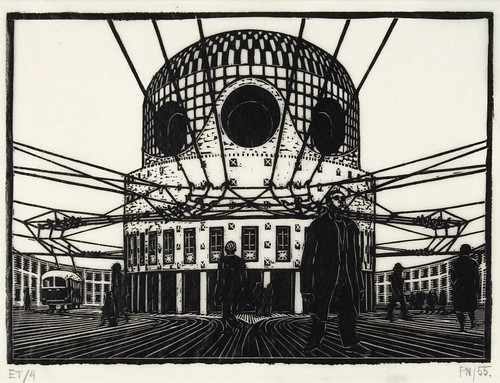
Its difficult to find any information on Palle Nielsen in English. He's one of the Danish artists whose work I first encounteed in Copenhagen in 2004.

==================================
At Clausens in Copenhagen. (I've visited this gallery)
http://www.clausenskunsthandel.dk/kunstnere/palle-nielsen

Exhibitions

Parklandet - 2010
Menneskebilleder - 2008
Drengebilleder - 2005

==============================

565
Works by the artist in Danish museums

https://www.kulturarv.dk/kid/VisKunstner.do?kunstnerId=2357

==============================


Palle Nielsen, born in Denmark in 1920, is considered one of the masters of graphic arts of his era. He was educated as art designer in the School of Art and Design of Copenhagen and he worked as one until 1943. He worked as a professor in the Royal Danish Academy of Fine Arts from 1967 to 1973. At the same time, he received a number of awards and honours, such as the lifelong grant of The Danish Arts Foundation.


The Museum of Cycladic Art in collaboration with the Danish Institute at Athens and the Vejle Kunstmuseum, present from September 22nd to October 25th 2009 an exhibition with selected works of the Danish graphic artist, Palle Nielsen (1920-2000). The exhibition will house well known works by the master Danish artist of the 20th century, executed in various techniques, as drawing, watercolour, wood engraving and linocut.

Palle Nielsen was mostly inspired by the classical architecture, especially of ancient Greece and Rome. Raised in the difficult years between the two World Wars, he kept deep inside his hate and aversion against violence and injustice, which is evident in his work. It is often remarked that Palle Nielsen executed his works in a way that interprets the Cold War atmosphere of the ’50s.


The exhibition is build around the breakthrough linocut series “Orpheus and Eurydice” (Part One), of 53 sheets, executed between 1955 and 1959. Palle Nelsen uses the classical Orpheus’ myth only as the narrative vehicle to incorporate in the series his view of the modern world along with the fears and deep concerns of his fellow man. His work presents various psychological conditions, creating a world of mixed emotions executed by the excellent technique and perfectionism of Palle Nielsen that appeal both to the intellectual and the emotional side of the viewer.

more

(I've visited this gallery too)


==============================


http://www.vejlekunstmuseum.dk/

Images on Google

The Shadows

01 May, 2011

Wartime - Stuttgart


STUTTGART.-
The exhibition “Kollwitz – Beckmann – Dix – Grosz. Wartime” brings together works from within the Staatsgalerie Stuttgart’s collection – immediate artistic reactions to the two devastating world wars and society in the first half of the twentieth century.

Series and portfolios by these artists rarely shown in their entirety are included, as are self-portraits and other impressive individual works. The drawings and prints are complemented by a small number of paintings and sculptures.

For the first time in more than forty years, the Staatsgalerie is presenting its complete internationally noteworthy Käthe Kollwitz holdings, comprising some one hundred drawings and prints. Her oeuvre offers above all investigations – as forceful as they are distressing – of the themes of “war”, “death” and “family”.

The artist’s son and grandson were killed in action in the two world wars, losses that caused her painful uncertainty about her own existence. The Staatsgalerie Stuttgart presents its rich holdings of Käthe Kollwitz drawings and prints, among them her four series “A Weavers’ Rebellion”, “Peasants’ War”, “War” and “Death”.

They are enhanced by works of such Kollwitz contemporaries as Max Beckmann, Ludwig Meidner, Otto Dix and George Grosz to form a powerful image of an epoch.

In the etching series “The War”, published in Berlin in 1924, Otto Dix (1891–1969) visualizes the events and consequences of the battles in France and Belgium with relentless harshness.

Max Beckmann (1884–1950) is represented with works executed during and after World War I, for example the recently purchased drawing “Nurse and Male Figure Tending to Sick Patient” of 1915.

George Grosz (1893–1959) documents in this show primarily the period between the world wars. Characterized by poverty, hunger, hardship and insurgency, it was an era of a still very “warlike” nature, as seen in Grosz’s 1922 series “The Robbers: Nine Lithographs on sentences from Schiller’s Robbers”.

Works by Ernst Barlach (1870–1938) and Ludwig Meidner (1884–1966) are also on view, as are two further series presenting war in all its absurdity and destructive frenzy: “The Damned” by Otto Herrmann (1899–1995) of Stuttgart, executed in the years 1947–50 after Theodor Plievier’s novel “Stalingrad”, and “DRESDEN 1945” by Wilhelm Rudolph (1889–1982).

Anselm Kiefer (b. 1945) is represented in the exhibition with his work “Heroic Symbols” of 1969, acquired by the Staatsgalerie Stuttgart in 2010. In it he examined the impact of fascism on post-1945 art and his personal stance on that phase of German history.

Art in any shape or form can be beautiful, cheering, soothing – or simply exist without any ulterior motive. Just as important a function of art, however, is to stir people up, call their attention to adverse circumstances, remind them of human nature’s pitfalls – and thus to intervene in society’s processes.

http://www.artdaily.org/index.asp?int_sec=11&int_new=46944

=================

Kollwitz – Beckmann – Dix – Grosz. Wartime

For the first time in more than forty years, the Staatsgalerie is presenting its complete internationally noteworthy Käthe Kollwitz holdings, comprising some one hundred drawings and prints. They are enhanced by works of such Kollwitz contemporaries as Max Beckmann, Ludwig Meidner, Otto Dix and George Grosz to form a powerful image of an epoch. Series and portfolios by these artists rarely shown in their entirety are included, as are self-portraits and other impressive individual works. The drawings and prints are complemented by a small number of paintings and sculptures.

Introduction to the exhibition
Paintings Overview
Tour
List of Artists
Calendar of Events

http://www.staatsgalerie.de/ausstellung_e/kriegszeit/

29 April, 2011

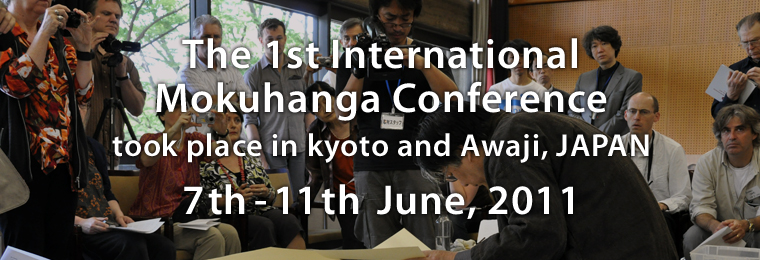
First Mokuhanga Conference


EXCITING EVENT FOR ALL MOKUHANGA LOVERS - There is still time to register!

The Opening of the First Mokuhanga Conference is growing ever nearer. This pioneering international conference crosscuts all woodblock print communities, including artists, art educators, researchers, print lovers, Japanese artisans and woodblock suppliers alike. It is not too late to join in this event taking place both in historic Kyoto and the open air of Awaji Island.

Please download the Registration Form (Individual/Group) from MAIN PROGRAM > Registration.
Once we have received your registration form, we will send you an invoice as well as instructions for payment.

Registration Deadline:Tuesday, May 31, 2011

http://www.mokuhanga.jp/en/index.html

exhibitions
http://www.mokuhanga.jp/en/program/exhibitions_portfolio.html


28 April, 2011

Royal Wedding Print


Commerorative print from Mark Rowden

The Royal Wedding of Prince William & Catherine Middleton

Artwork: Prince William & Catherine Middleton

Relief lino print Edition of 50

Print size: 30 x 24cm

Please email artymark@hotmail.com for details

http://www.markrowden.com.au/prince_william_and_kate_middleton.htm


Print Exchange blog

Unlike artists working in other media, printmakers and photographers have the ability to produce editions of original artwork. Print exchanges take advantage of the multiple, allowing artists to share their artwork, while simultaneously building a collection of artwork from around the globe. This blog aims to serve as a one-stop source for finding information on upcoming print exchanges. It will aggregate the pertinent information about each exchange, providing links where details may be found.


http://printexchanges.blogspot.com/

Non Toxic Printmaking


http://www.nontoxicprint.com/introduction.htm


Home Page
Introduction
CONTENT
SafePaintingDOTcom
Safe Painting
Safe Wall Paints
On Pigments
PRINTMAKING RESOURCES
INTAGLIO MANUAL
BEGINNERS COMPENDIUM
The New Etching Chemistry
The Contemporary Printmaker
Etch Copper and Brass
Etch Zinc, Steel, Aluminum
Copper Sulfate Mordant
Acrylic Resist Etching
Hard and Soft Ground
Aquatint
Electro Etching
Grabado Electrolitico
Galvanografia
History of Electro Etching
Photocopy Etch
Etching Ingredients
Polyester Plate Litho
Akua Inks
A European Perspective
Intaglio Type
Aquatint Screen
Perfect Registration
New Terminology
Solarplate
Silkscreen Printing
Starch-based Serigraphy
Green T-Shirt Printing
Litho Toner Wash
Waterless Lithography
Stone Lithography
Plaster Printing
Collagraph
Drypoint
Woodcut
HEALTH + SAFETY
NONTOXIC WORKSHOPS
Safe Solvents
The Toxicity of Solvents
Reproduction Risks
The Green Print Studio
The Green Art School
Artmaking and The Law
Perfect Chemistry
Art meets Science
Articles
Printmaking Liberated
Publications
Non-English Pages
Print Gallery
Photo Gallery